
Cooktown Botanic Gardens and Gallop Botanic Reserve
Cooktown Botanic Gardens. Established in 1878 the Gallop Botanic Reserve encompases 62.3 Ha (154 acres) on the edge of Cooktown and contains the Cooktown Botanic Gardens and walking trails to Finch Bay and Cherry Tree Bay.
Cooktown Botanic Gardens Today
Guided tours of the garden April-October
Educational and Research Groups by appointment.
Sandy Lloyd, Curator, 0437 910883.
November in the Gardens
|
|
|
|---|
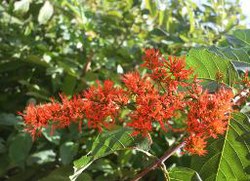
Dillenia alata,Red Beech or Golden Guinea Tree, flowers for most of the year
|
|
|
|
|---|---|---|
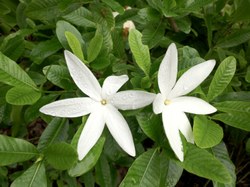
|
Archidendron hendersonii, |
Cassia fistula, |
Cerber manghas, |
October in the Gardens
|
|
|
|
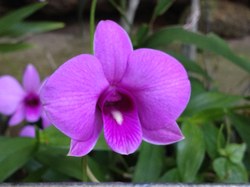
Cooktown Orchid usually finishes flowering by late May and here, in flower in November! |
The Cedar Bay Cherry or Beach Cherry, Eugenia rheinwardtiana, grows back of the beaches and has delicious cherries. |
The Native Peanut Tree, Sterculia quadrifida has flowered and is fruiting for the first time in the gardens. The spectacular pods have split to show the edible peanuts, more delicious than the commercial peanut, which grows under the ground.
Eugenia rheinwardtiana, the Beach Cherry or Cedar Bay Cherry, also has delicious fruits at this time of the year. A low growing shrub that grows in sandy soil back of the beaches, it is related to the Lilly Pillies.
The Cooktown Orchid, State Emblem of Queensland, usually finished by May, has an occasional flower that doesnt know what season it is! This orchid used to be all over Cooktown and in the wild. Now few are seen thanks to unscrupulous orchid collectors. Generous donations by Jason OBrien, member for Leichhardt, and Cooktown Local News, the Bousens, have made our precious collection of Cookies possible!
The Collections
The Main Lawn, with exotic fruit trees, eg Black Sapote or Chocolate Pudding Tree, Jackfruit, Mango, Brazil Cherry, Breadfruit, Lychee, Star Fruit, Five-Corner Fruit, Bael Fruit and many more, some of which are original specimens of the 1886 gardens, sent by the Queensland Society for Acclimatisation as a trial to see how they would work as a commercial crop. Some are still in existence from that planting and are identified on the label plates. When in fruit these plants are a favourite of the Cooktown kids.
The historic Solander Garden has living specimens of the 325 plants collected by Sir Joseph Banks and Daniel Solander on board the Bark Endeavour with Captain Cook at the Endeavour River, Cooktown in 1770. They were here for longer than elsewhere in Australia, having run aground on the reef. This makes the area the basis of the European knowledge of Australian flora of the time and therefore a very important part of our heritage. The scientists on board collected plants, the artists on board painted these, and the original herbarium specimens were retained by Joseph Banks who later gave them to the British Natural History Museum. Some of these were returned to the Australian National Herbarium in Canberra, some in the Queensland Herbarium.
This is the primary collection of our living museum. Living specimens of these plants are our heritage and our history.
A “Palmetum” with both native and exotic palms.
The Society for Growing Australian Plants Garden. Created by the Cairns and Tablelands group, who come annually and spend a weekend in June every year, and have done since 1986. We are fortunate to have this assistance.
The “Enchanted Garden”, a shady damp place with Gingers, Costus, Bromelliads, ferns – we plan to make it a fairy land.
The Flower Garden. Originally for cut flower production to bring money into the gardens to pay for the maintenance. This has been fenced to protect from the wallabies that were a problem. Heritage fencing, as the gardens is heritage listed. Cut flowers are not a viable option for us as they are normally annuals and the maintenance requirements high.
The Orchid House. This has become quite substantial. We expanded the house itself to contain new orchids. Firstly Flecker, Cairns Botanic Gardens donated many exotic orchids, and we received funding from Jason Obrien and the Cooktown Local News for many Cooktown Orchids, the State Floral Emblem. These generally flower early in the year and are finished by end of May.
The Desert Garden, succulents and cacti.
Timber Trees Section, including Kauri Pine (Agathis robusta), and Kwila (Insia bejuga).
The Wetlands, Mangroves (especially those painted by Vera Scarth-Johnson) and other wetlands plants including the Nypa Palm.
A Syzygium Section, The Lilly Pillies or Satinashs, from the Myrtaceae family.
The Brachychiton Section on Diane Duncan Hill. The Kurrajongs and related plants. The hill was cleared of woody weed to expose the granite boulders and give space for these large trees. The Boab is there also and Bombax, the Red Silk Cotton Tree.
The Vera Scarth-Johnson Garden. Plants painted by Vera, mainly close to the Natures Powerhouse and in the sand garden, as she favoured the flowers of the heathlands.
An Aroid garden featuring the Arum lillies, large Elephant Ears and Amorphophallus species, including the Titan Arum, is under development.
History of the Gardens
Gallop Botanic Reserve
During the last quarter of the nineteenth century it appears to have been Government policy to set aside Botanic Reserves in many newly established towns in Queensland, and these were provided for during the initial surveys of the town areas. Cooktown was one of the towns so endowed in 1878 with an area of 154 acres set aside. The Reserve extends from the rocks on the coast in Cherry Tree Bay, South along the coast to Alligator Creek in Finch Bay, up the creek to Hogg Street, Garden Street and a North, North-easterly line back to the rocks.
The Botanic Reserve was vested in the Cooktown Municipality, and the Government allocated an annual grant of £200 to assist in its development. The Council completed fencing of the Reserve early in 1885, enclosing the side nearest the town with palings.
In 1980, the Cook Shire Council resolved to name the Reserve the "Gallop Botanic Reserve" to commemorate the contributions of Mr R. D. Gallop and Mr G. D. Gallop, previous Administrators of the Shire.
Cooktown Botanic Gardens
In October 1885 the Council employed a botanist, Anthony Perieh, to lay out the nursery for the Gardens, which were to be established on the portion of the reserve closest to town. Then early in 1886 they contracted with John Welsh to dig over the Gardens, giving him two months to complete the job. In March 1886 young trees and shrubs were ordered from the Queensland Acclimatisation Society in Brisbane, and Mr Perieh was busy getting them established in the Gardens.
In 1890, C Watson and T Hassett were working as gardeners, and since there were now plants to look after, a well was sunk by Cross and Dufficy; and a pump, tank, and pipe reticulation installed. A second well was sunk at some later stage. The wells are still in use today. The water reticulation appliances have long been removed.
In 1892, a cottage was built on the Reserve and C Watson was installed as resident Curator of the Gardens. At this period the Gardens had been enclosed with a paling fence and were intensively developed with lawns, shrubs and garden beds, and named Queen's Park. Stone lined paths, stone pitched pools and stonework footbridges were built along a creek descending from the hills behind Cherry Tree Bay. In later years Mr Claussen, father to the late Lennie Claussen, filled the position of Gardens' Curator.
During the period of greatest activity a wide range of trees and shrubs of both decorative and economic value were planted in the Gardens. Shade and street trees in the Cook Monument Park, and in the main street, were part of the Botanic Gardens activities at this time.
Little further attention was given to the Gardens and they gradually fell into disrepair. In the mid 1970’s Mr SE Stephens, Hon. Curator of History, James Cook Museum, identified 18 plant species still surviving. Some restoration of the stone-pitched pools was undertaken in the early 1980’s. By 1990, 35 plant species had been identified as surviving species.
In 1984, Council commenced reconstruction of the Gardens with the assistance of Commonwealth Employment Funding. The original Gardens area has been cleared, stonework rebuilt and trees removed. A walking track has been cleared to Finch Bay along the old dray track. A walking track continues from this track to Cherry Tree Bay.
The Visitor Information Centre, Natures Powerhouse, is located in the gardens and has a verandah cafe where you can enjoy delicious food in the ambience of the gardens, the Wildlife of Cape York, a Qld Museum exhibit, a bookshop and the Vera Scarth-Johnson Gallery. If you are into nature or art or simply need information on Cape York this is the place to visit!